
Academic Bulletins & Guided Search
Oct 12, 2022

Academic bulletins are roadmaps that provide students with the information they need to make the most of their educational program and graduate in a timely manner. They are the official source of information regarding degree requirements, and students are expected to rely on them when planning their studies.
As we evaluated and planned for a refresh of the academic bulletin system, one issue in the current user flow quickly stood out: the process of finding the right bulletin could be not only time-consuming but also confusing.

Which bulletin should I use?
Where can I find the information I need?
These were recurring questions for students. Addressing them with a universal solution that could work across all nine campuses within the Indiana University system became our priority.
My initial idea was to redesign the site search, making it more prominent given the sheer volume of bulletin pages. The lengthy index lists were a major obstacle in a “typical” user flow, and this issue was amplified further at larger campuses with more programs.

However, adding filters introduced new challenges. From a student’s perspective:
What keyword(s) should I use?
What if I’m not enrolled in a particular school yet?
Which “year” should I pick?
What if I just want to explore a program before committing?
These questions highlighted an important design challenge: while filters help users refine their search, they can also overwhelm them with too many options.
So the question became: How can we simplify the search process while still providing guidance when needed?
Introducing Guided Search
One solution to this problem is guided search.
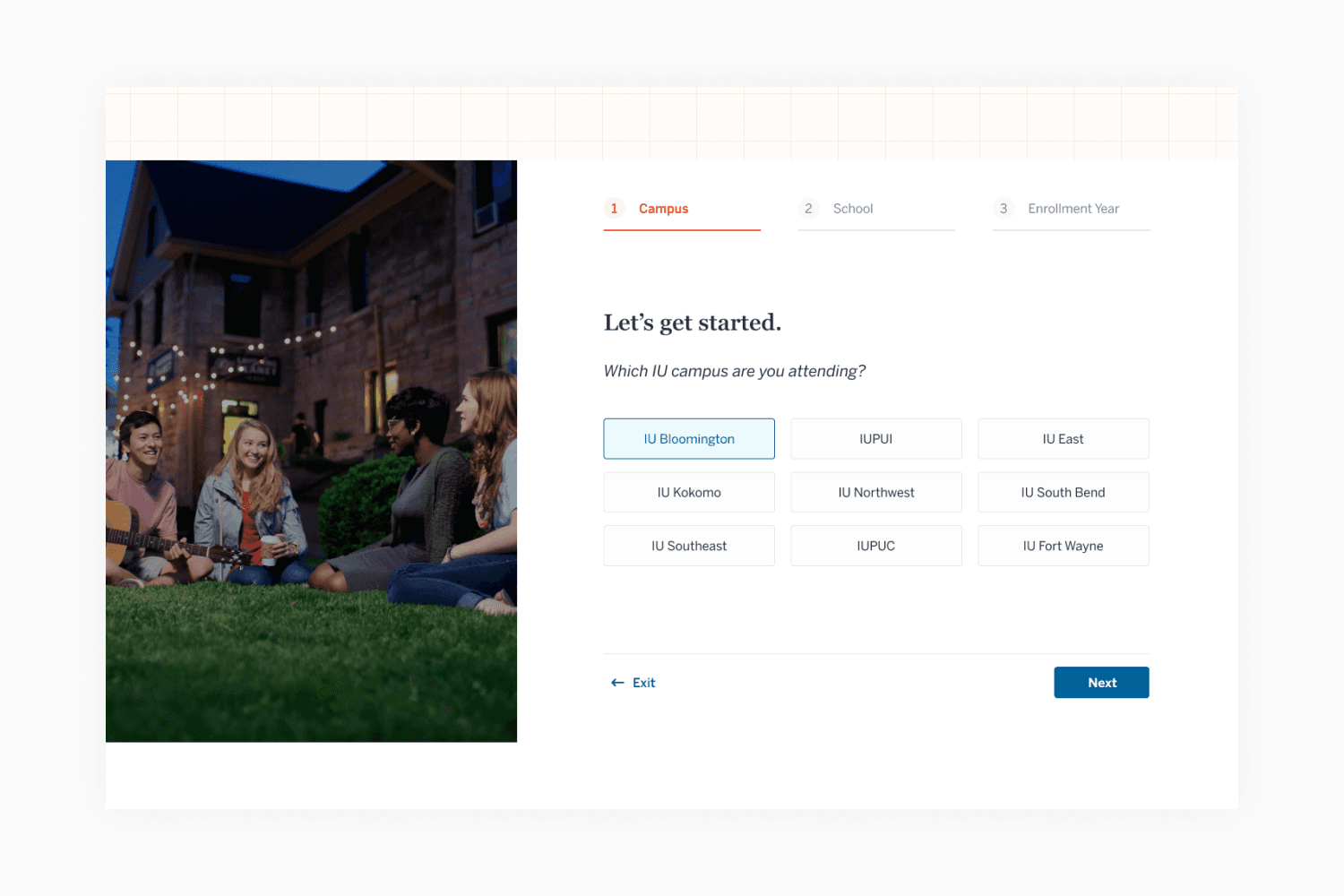
When a student clicks on “Find my bulletin”, they enter a step-by-step flow. The system begins by asking for their campus, guiding them through a funnel that narrows down the options to the correct bulletin.
The idea draws from conversational user interfaces. As virtual assistants and AI-driven systems become part of everyday life, users increasingly expect online experiences that feel approachable, guided, and human-centered.
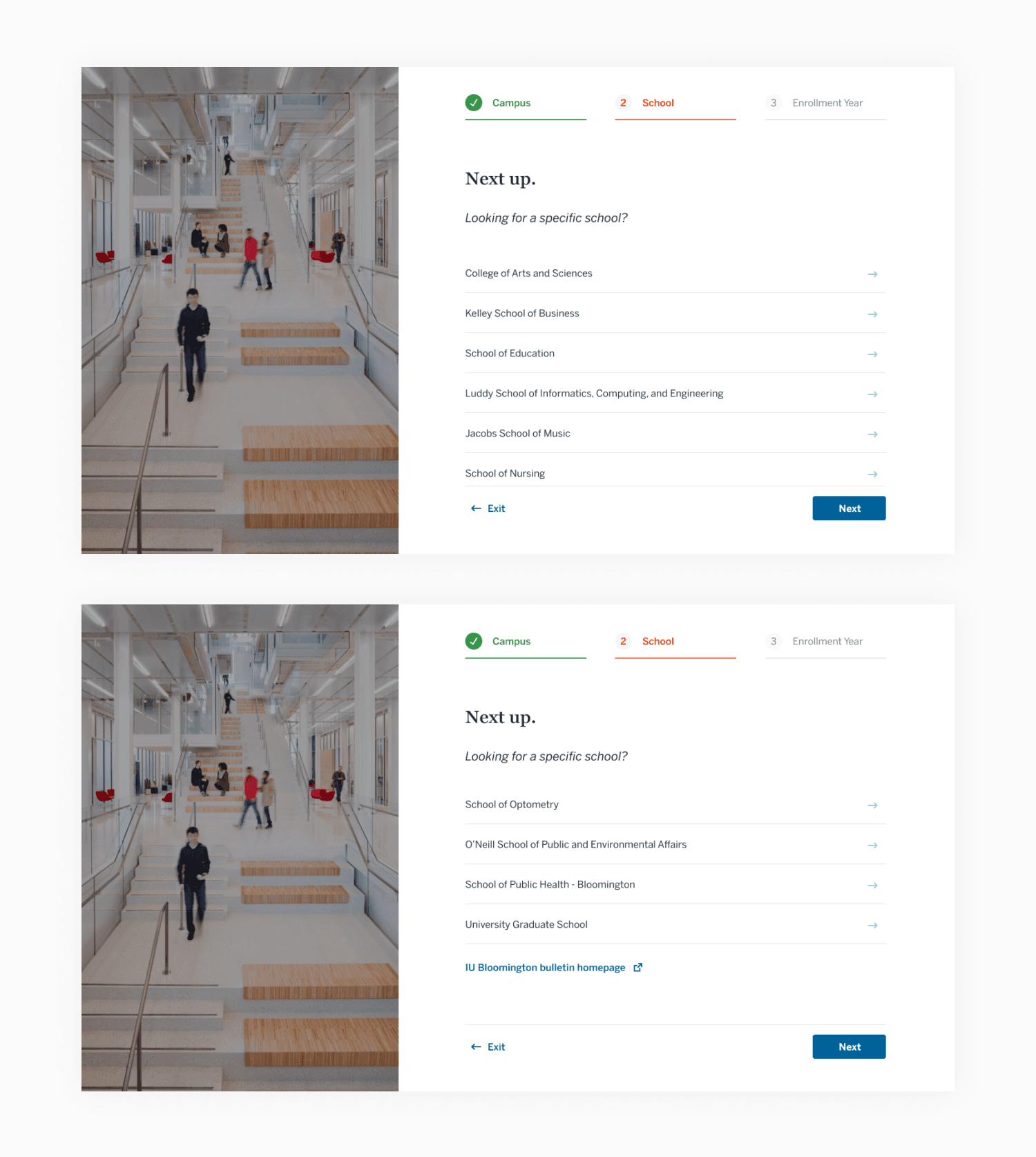
Guided search provides just enough structure to remove ambiguity. For example, some schools operate across multiple campuses, each with its own bulletin and requirements. A traditional keyword search would return every version, leaving the student to guess which one applies. Guided search, by contrast, ensures they take the right path from the start.
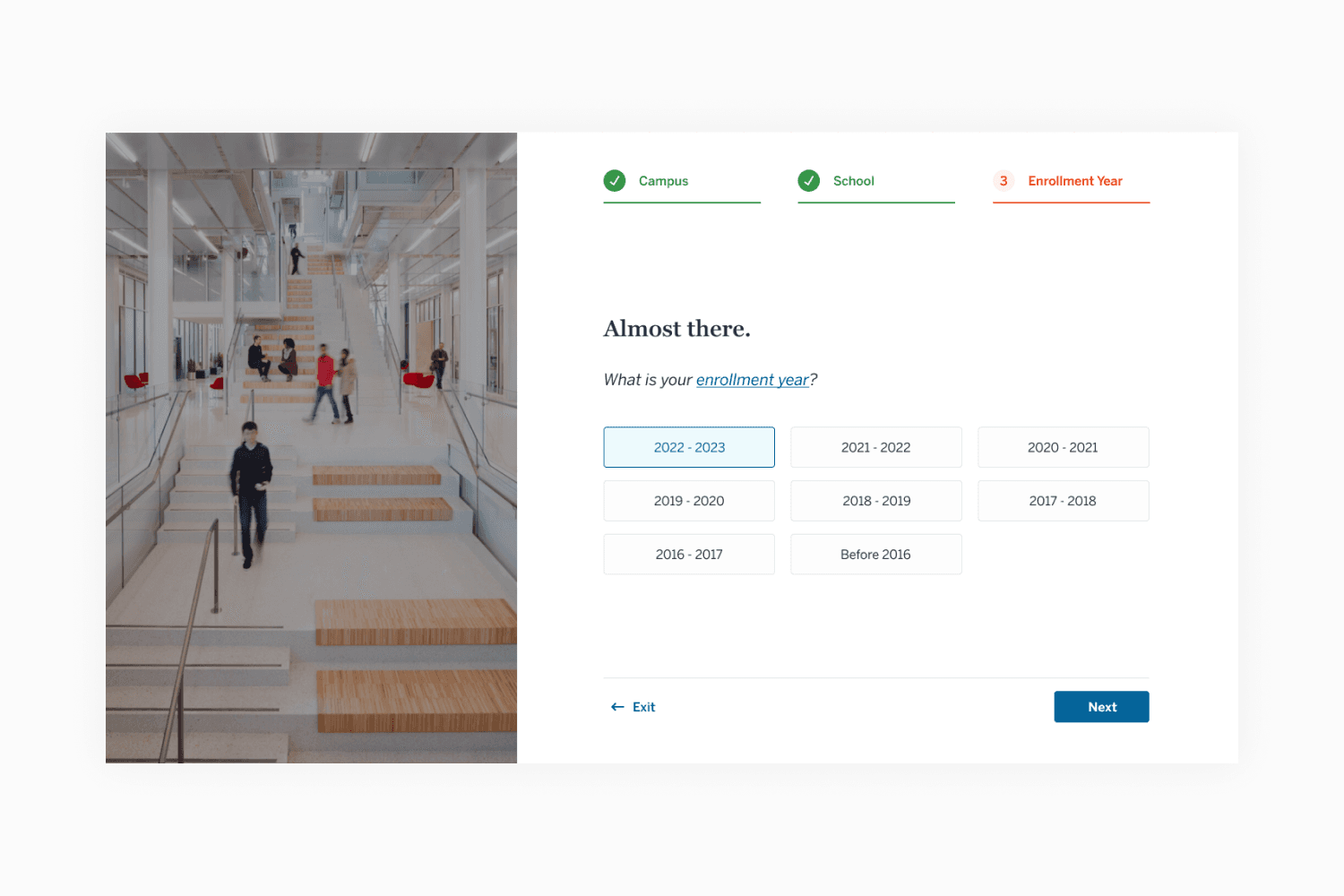
Even concepts that often confuse students, like “enrollment year,” are clarified within the guided search flow. A short explanation appears at the right moment, reducing uncertainty and helping students move forward with confidence.
What's next?
Guided search makes it easier for current students to find the bulletin they need, but traditional keyword search still has its advantages. For prospective students or those exploring programs outside their major, keyword search remains an essential discovery tool.
Next, I plan to focus on improving that keyword search experience, making exploration just as intuitive as guided navigation.